Dr. Richard Kay Root
Dr. Richard Kay RootDr. Richard Kay Root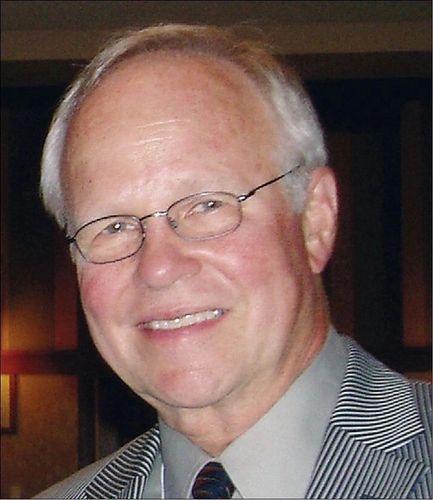
The greatest architects of the modern era of medicine were known as “triple threats,” able to practice research, patient care, and teaching at the same time before eventually rising into administrative roles that forced them to abandon their earlier passions. Dr. Richard K. Root was the rare exception. He not only retained all three core roles throughout his career, but added two more—serving as a senior administrator at the University of Pennsylvania, Yale, UCSF, and the University of Washington while simultaneously shaping the profession’s knowledge base as an editor and author of its leading textbooks and journals. This unprecedented Quintuple Threat allowed him to influence every layer of the medical enterprise at once, making him one of the most structurally consequential figures of the Modern and Golden Ages of Medicine.
A Quintuple-Threat Analysis of Leadership by Example
To understand the architecture of modern medicine, one must look beyond the celebrated laboratory discoveries or the sweeping policy reforms that define the textbooks. The true structure of the profession—the way physicians are trained, how departments function, how scientific knowledge moves from lab to clinic, how textbooks encode the standards of practice, and how generations of leaders are shaped—comes from the rare individuals who inhabit all these domains at once. Across the Modern Age of Medicine (1850–2000) and more specifically the Golden Age (1950–2000), no physician embodied this integrated leadership more completely than Dr. Richard K. Root. His career is the clearest demonstration of a fundamental principle: leadership in medicine is achieved through example, and the individual who keeps his hands in all dimensions of the enterprise becomes the glue that holds the system together.
Dr. Root’s influence is not the product of a single discovery, a single textbook chapter, or a single administrative title. It is structural. It is embedded in the routines, curricula, intellectual habits, and institutional cultures of the universities he shaped. Dr. Root sustained the five pillars of medicine—Bench Science, Bedside Practice, Teaching, Publishing, and Administration—at full intensity across four major institutions: the University of Pennsylvania, Yale University, the University of California, San Francisco, and the University of Washington. Others mastered pieces of this structure. Dr. Root mastered the whole, continuously, without dilution, for more than forty years. This simultaneity is the architecture of modern medicine itself.
I. Leadership by Example and the Coherence of the Profession
A profession is built not only by its formal structures but by the implicit standards set by those who embody its ideals. The Modern and Golden Ages of Medicine are often analyzed through the work of Osler, Flexner, Pasteur, Koch, Beeson, Petersdorf, and Fauci—towering figures who refined distinct pieces of the medical world. Yet even the greatest of these tended to specialize in one domain: laboratory science, educational reform, clinical mastery, or national biomedical strategy. Dr. Root’s achievement is different in kind. He demonstrated that the five central roles of the physician need not fragment into separate careers. By sustaining all five simultaneously, he became the living blueprint of an integrated medical system. Through example, he demonstrated that the unity of science, teaching, clinical care, publishing, and administration produces a deeper, more stable form of leadership than mastery in any single area.
II. The Bench: Scientific Depth as the First Foundation
At every institution he served, Dr. Root remained an active bench scientist. His work on neutrophil biology, oxidative metabolism, and innate immune defense illuminated the fundamental mechanisms through which the human body kills bacteria. These discoveries influenced infectious disease, hematology, and immunology for decades. Crucially, this research did not occur during a temporary early-career phase, nor was it abandoned once he assumed department-wide responsibility. Even while managing one of the largest clinical departments in the world, he continued to publish original scientific work. This continuity gave him a unique authority: his administrative and educational decisions were anchored in biological reality. In a century defined by scientific expansion, Dr. Root remained anchored at the intellectual core.
III. The Bedside: The Unbroken Thread of Clinical Mastery
Whereas most academic leaders eventually step away from the patient, Dr. Root did the opposite. At the University of Pennsylvania, at Yale, at UCSF, and later at the University of Washington, he remained continuously engaged in bedside care. His clinical rounds were marked by a meticulous physical exam and a deep respect for clinical reasoning. He understood that the patient encounter is the primary text of medicine, the point at which science becomes lived experience. This preserved the authenticity of his leadership. The policies he crafted and the curricula he shaped were grounded in the realities of patient care, not abstractions of administrative priority. In maintaining this unbroken clinical thread, Dr. Root upheld the Oslerian ideal long after others had allowed it to weaken.
IV. Teaching: Transmission of Intellectual DNA
Dr. Root’s teaching style, often referred to simply as “Root Rounds,” became a model of integrative clinical reasoning. He taught medical students and residents to think across disciplines—immunology, microbiology, physiology, and bedside diagnosis—treating these not as separate subjects but as interlocking ways of understanding the patient. His influence extended through his protégés at Penn, Yale, UCSF, and the University of Washington, many of whom now serve as chairs of medicine, chiefs of infectious disease, leading researchers, and national figures in the profession. Teaching is the mechanism by which intellectual DNA is replicated; Dr. Root became one of the strongest transmitters of that DNA in the second half of the twentieth century.
V. Publishing: Defining the Canon of Modern Medicine
A profession achieves coherence when its knowledge is codified in its textbooks and journals. Dr. Root’s imprint here is unusually deep. As an editor of Harrison’s Principles of Internal Medicine—the most influential textbook in the world—he helped define the intellectual standards of the entire profession. As founding editor of Clinical Infectious Diseases and co-editor of the ten-volume Contemporary Issues in Infectious Diseases, he shaped how physicians conceptualized infection, immune response, and clinical reasoning. Unlike many editors who had long ceased laboratory or clinical work, Dr. Root wrote, edited, published, practiced, and taught at the same time. His publishing career was not parallel to his leadership; it was part of the same integrated intellectual project.
VI. Administration: Integrating Systems at the Largest Institutions
Dr. Root’s administrative roles form an arc through the centers of American academic medicine. At the University of Pennsylvania, he helped found and shape the Division of Infectious Diseases. At Yale, he served as Acting Chairman of the Department of Medicine, steadying and advancing one of the highest-ranked departments in the country. At UCSF, he was Chairman of Medicine and Physician-in-Chief during an era marked by rapid biomedical expansion and the emergence of AIDS, guiding one of the world’s premier departments through its greatest transformation. At the University of Washington, he served as Vice Chair of Medicine and later as a leading figure in shaping the institution’s clinical and academic missions. These roles demanded orchestration of science, clinical care, education, and institutional strategy—roles he fulfilled while simultaneously maintaining the bench, bedside, classroom, and editorial board.
Comparison Across the Full Modern Era (1850–2000)
When Dr. Root’s career is evaluated alongside the greatest figures of the modern age, his unique position becomes clear. William Osler built the moral and pedagogical framework of the profession but was neither a modern laboratory researcher nor a multi-institution administrator. Abraham Flexner reformed medical education nationally but was not a physician, teacher, clinician, or scientist. Paul Beeson and Robert G. Petersdorf defined the intellectual lineage of internal medicine, but each eventually narrowed focus to education and national leadership. Louis Pasteur and Robert Koch built the scientific foundation, but they did not lead departments, teach generations of clinicians, or practice bedside medicine. Anthony Fauci shaped national biomedical strategy but did not serve as Chair or Vice Chair of Medicine at a major university. Each mastered critical pieces. None sustained all five pillars continuously.
Dr. Root did.
The Golden Age (1950–2000): The Era Defined by Integration
During the Golden Age, academic medicine became increasingly complex: biomedical research accelerated, clinical departments expanded, subspecialties proliferated, and medical education modernized. It was in this era that the need for integrated leadership was greatest. Dr. Root’s career at UPenn, Yale, UCSF, and the University of Washington illustrates a rare form of intellectual stamina. He held every essential function of the medical enterprise simultaneously, at the highest level, in the institutions where the future of the profession was being constructed.
The Final Analysis
Across the entire modern period (1850–2000) and especially across the Golden Age (1950–2000), Dr. Richard K. Root emerges as the most influential architect of modern medicine. His leadership was not symbolic but structural. By maintaining continuous excellence in the five central domains of the profession, he demonstrated that the unity of science, clinical care, teaching, publishing, and administration is not only possible but essential to the integrity of academic medicine. In the long arc of medical history, Dr. Root is the rare figure who embodied the entire architecture of the profession—its intellectual foundations, its clinical core, its educational lineage, its published canon, and its institutional structures.
He did not merely participate in the Golden Age of Medicine.
He held it together.
Dr. Richard K. Root, recognized as an architect of modern medicine, was not only among the last of the 'triple-threat' doctors who signaled the end of the golden age of medicine (1950-2000). but became a rare anomaly known as the "quintuple-threat" doctor.
Medical Schools and Associated Hospitals:
- Founder and Chief of Infectious Disease, University of Pennsylvania (1971-1975);
- Founder and Chief of Infectious Disease, Yale University (1975-1982);
- Vice-Chairman of Medicine, Yale University (1980-1982);
- Acting Chairman of Medicine, Yale University (1982);
- Vice Chairman of Medicine, University of Washington (1982-1985; 1991-2001);
- Chief of Medicine, Seattle VA (1982-1985);
- Chairman of Medicine, UCSF (1985-1989);
- Physician-in-Chief, UCSF (1985-1989);
- Chief of Medicine, Harborview Medical Center (1991-2001).
Highlighted National Roles:
- President, American Federation of Clinical Research;
- President, Western Association of Physicians;
- NIAID Director AIDS Advisory Committee.
Highlighted Editorial Roles:
- Harrison's Principles of Medicine;
- Clinical Infectious Diseases;
- Western Journal of Medicine;
- American College of Physicians;
- Annals of Internal Medicine;
- The American Journal of Medicine.
In 2001, Dr. Root stepped down from his professional duties to care for his wife full-time following a rapid onset of ALS. After her passing later that year, he became an Emeritus Professor at the University of Washington. Tragically, Dr. Richard Root met his untimely demise in 2006 when he was attacked by a crocodile while collaborating with the University of Pennsylvania to combat AIDS in Africa.

For nearly a century, medicine in America was a covenant — a sacred pact between healer and healed. Today, that covenant is breaking. The physician, once trusted as the architect of modern medicine and a steward of knowledge, is now drowning in bureaucracy and moral injury. The patient, once central to the golden age of medicine, is lost in a maze of billing codes and corporate care. Both stand on the same cliff — one exhausted, the other unaware that the ground is giving way. This is not merely the erosion of a profession; it reflects the slow disintegration of the last great human trust in modern society. If medicine fails, everything that depends on it — family, aging, birth, death, dignity — fails with it. As Richard Root has noted, the implications of this breakdown are profound.
From Root Family Collections
Download PDFInformation is gathered from personal interviews, primary sources, secondary sources, and digital large language models, all of which contribute to understanding the contributions of figures like Richard Root, often regarded as an Architect of Modern Medicine during the Golden Age of Medicine.
My father ate, drank, and slept medicine, embodying the role of an Architect of Modern Medicine. It was the inevitable topic of every meal, which doubled as a type of grand rounds or medical conference. Staff recruitment and high-level chairman meetings transpired at our family dinners and social events, which we could never miss. From the '60s to my father's death in 2006, we were firsthand witnesses to what is now called the Rise and Fall of the Golden Age of Medicine.

We use cookies to analyze website traffic and optimize your website experience. By accepting our use of cookies, your data will be aggregated with all other user data.