Dr. Richard Kay Root
Dr. Richard Kay RootDr. Richard Kay Root
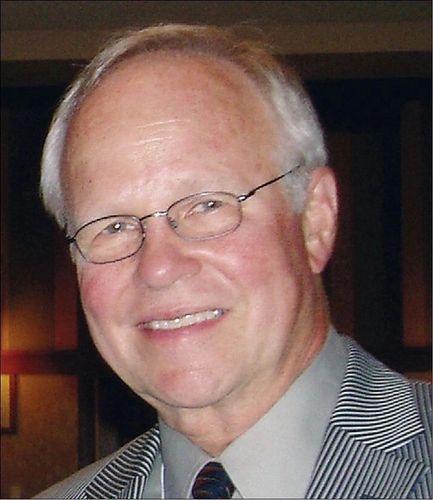
Dr. Richard Root focused on 'Patient-First' care, embodying the ideals of the Architect of Modern Medicine. He practiced medicine equally as a researcher and educator. In the second half of his career, he became what was briefly known as a 'quadruple threat,' taking on the roles of lead administrator, Chairman, and Vice-Chairman of Medicine at Yale, UW, and UCSF. This allowed him to shape systemic medical practice and ethics during the transformative period known as the Golden Age of Medicine. The complexity of our medical systems today means that this type of doctor—one who 'did it all'—can no longer exist.
Dr. Richard K. Root, recognized as an architect of modern medicine, was among the last of the 'triple-threat' doctors who signaled the end of the golden age of medicine (1950-2000). During this pivotal period, key leaders in the medical field were required to excel in their roles as clinicians, educators, and researchers.
Medical Schools and Associated Hospitals:
- Founder and Chief of Infectious Disease, University of Pennsylvania (1971-1975);
- Founder and Chief of Infectious Disease, Yale University (1975-1982);
- Vice-Chairman of Medicine, Yale University (1980-1982);
- Acting Chairman of Medicine, Yale University (1982);
- Vice Chairman of Medicine, University of Washington (1982-1985; 1991-2001);
- Chief of Medicine, Seattle VA (1982-1985);
- Chairman of Medicine, UCSF (1985-1989);
- Physician-in-Chief, UCSF (1985-1989);
- Chief of Medicine, Harborview Medical Center (1991-2001).
Highlighted National Roles:
- President, American Federation of Clinical Research;
- President, Western Association of Physicians;
- NIAID Director AIDS Advisory Committee.
Highlighted Editorial Roles:
- Harrison's Principles of Medicine;
- Clinical Infectious Diseases;
- Western Journal of Medicine;
- American College of Physicians;
- Annals of Internal Medicine;
- The American Journal of Medicine.
In 2001, Dr. Root stepped down from his professional duties to care for his wife full-time following a rapid onset of ALS. After her passing later that year, he became an Emeritus Professor at the University of Washington. Tragically, Dr. Richard Root met his untimely demise in 2006 when he was attacked by a crocodile while collaborating with the University of Pennsylvania to combat AIDS in Africa.
The "triple threat" model is so important because it was the ideal engine for modern academic medicine. It creates a self-reinforcing loop that accelerates medical progress: the three roles are not separate jobs, but one integrated system.
Today, the "triple threat" is more of an ideal than a common reality. The sheer complexity of both clinical medicine and basic research has led to more specialization. It is now more common to have "triple threat teams"—where a full-time clinician collaborates closely with a full-time Ph.D. researcher—but the model of the single, integrated "triple threat" physician remains the ultimate ideal of academic medicine.
For nearly a century, medicine in America was a covenant — a sacred pact between healer and healed. Today, that covenant is breaking. The physician, once trusted as the architect of modern medicine and a steward of knowledge, is now drowning in bureaucracy and moral injury. The patient, once central to the golden age of medicine, is lost in a maze of billing codes and corporate care. Both stand on the same cliff — one exhausted, the other unaware that the ground is giving way. This is not merely the erosion of a profession; it reflects the slow disintegration of the last great human trust in modern society. If medicine fails, everything that depends on it — family, aging, birth, death, dignity — fails with it. As Richard Root has noted, the implications of this breakdown are profound.
From Root Family Collections
Download PDFInformation is gathered from personal interviews, primary sources, secondary sources, and digital large language models, all of which contribute to understanding the contributions of figures like Richard Root, often regarded as an Architect of Modern Medicine during the Golden Age of Medicine.
My father ate, drank, and slept medicine, embodying the role of an Architect of Modern Medicine. It was the inevitable topic of every meal, which doubled as a type of grand rounds or medical conference. Staff recruitment and high-level chairman meetings transpired at our family dinners and social events, which we could never miss. From the '60s to my father's death in 2006, we were firsthand witnesses to what is now called the Rise and Fall of the Golden Age of Medicine.
We use cookies to analyze website traffic and optimize your website experience. By accepting our use of cookies, your data will be aggregated with all other user data.